

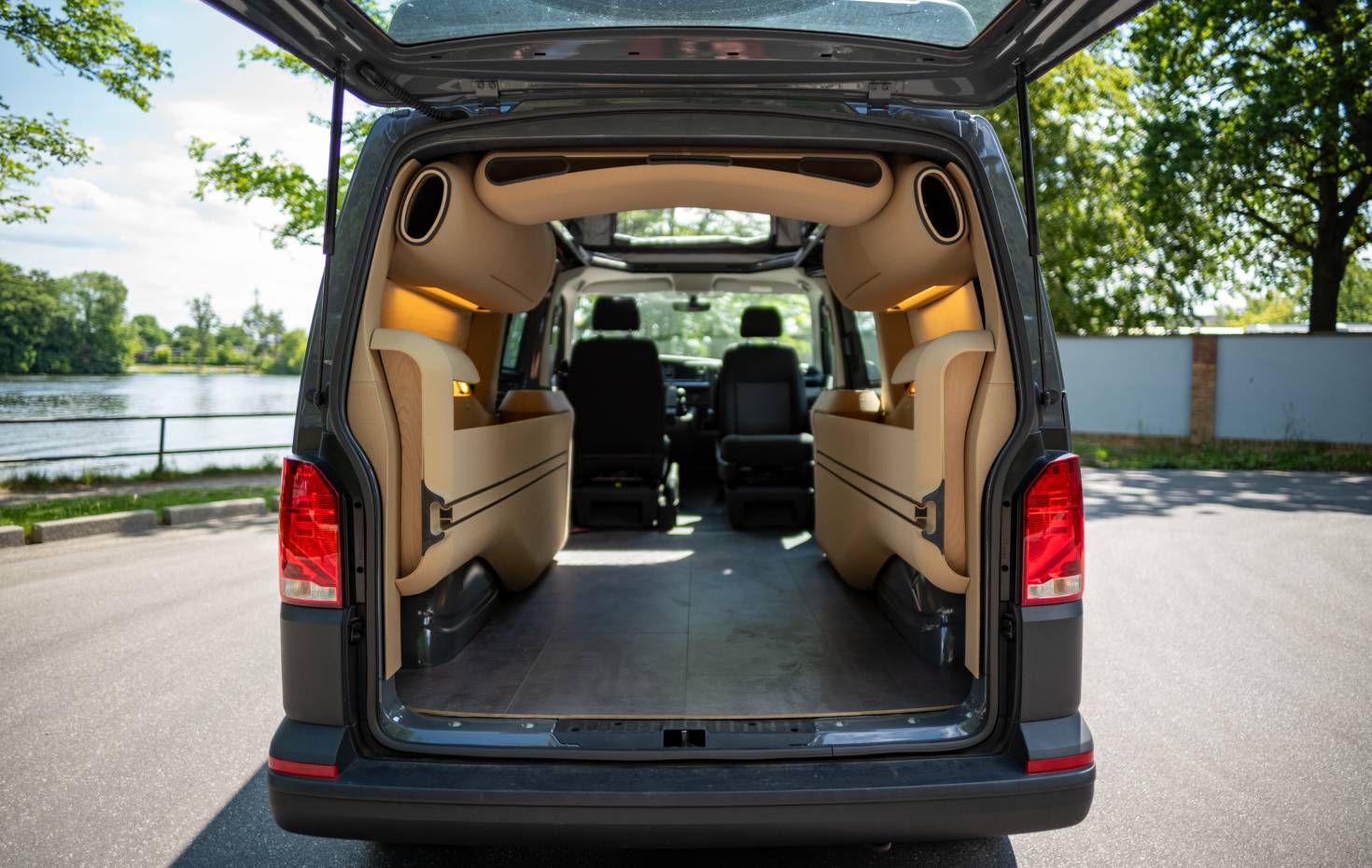
3D-printed campervan interior
US startup Materialogic develops an additively manufactured interior system for vans and campers
18 September 2026
Traditional camper van conversions are characterized by custom-cut components, templates, numerous manual adjustments, and, above all, a great deal of handiwork. The US-based startup Materialogic aims to fundamentally change this. By utilizing large-scale 3D printers, the company develops bespoke interior systems tailored precisely to the geometry of each individual vehicle.
3D printing as a new production platform for van converters
The focus extends beyond the 3D printing of individual parts. Materialogic integrates additive manufacturing with a “digital twin”—a comprehensive 3D model of the entire van interior. This model encompasses the vehicle chassis, furniture, electrical and plumbing systems, appliances, hardware, and the components to be 3D-printed.
According to the company, the process is based on OEM data provided by the vehicle manufacturers. This allows for digital modifications to the floor plan or installed components, which are then automatically incorporated into the 3D-printed parts. Materialogic offers van conversion companies both hybrid and fully 3D-printed interior solutions.
In the hybrid approach, complex geometries—such as pillar trim, window frames, or other components that are difficult to manufacture—are 3D-printed and combined with conventionally manufactured furniture. Alternatively, the interior can be produced almost entirely through additive manufacturing.
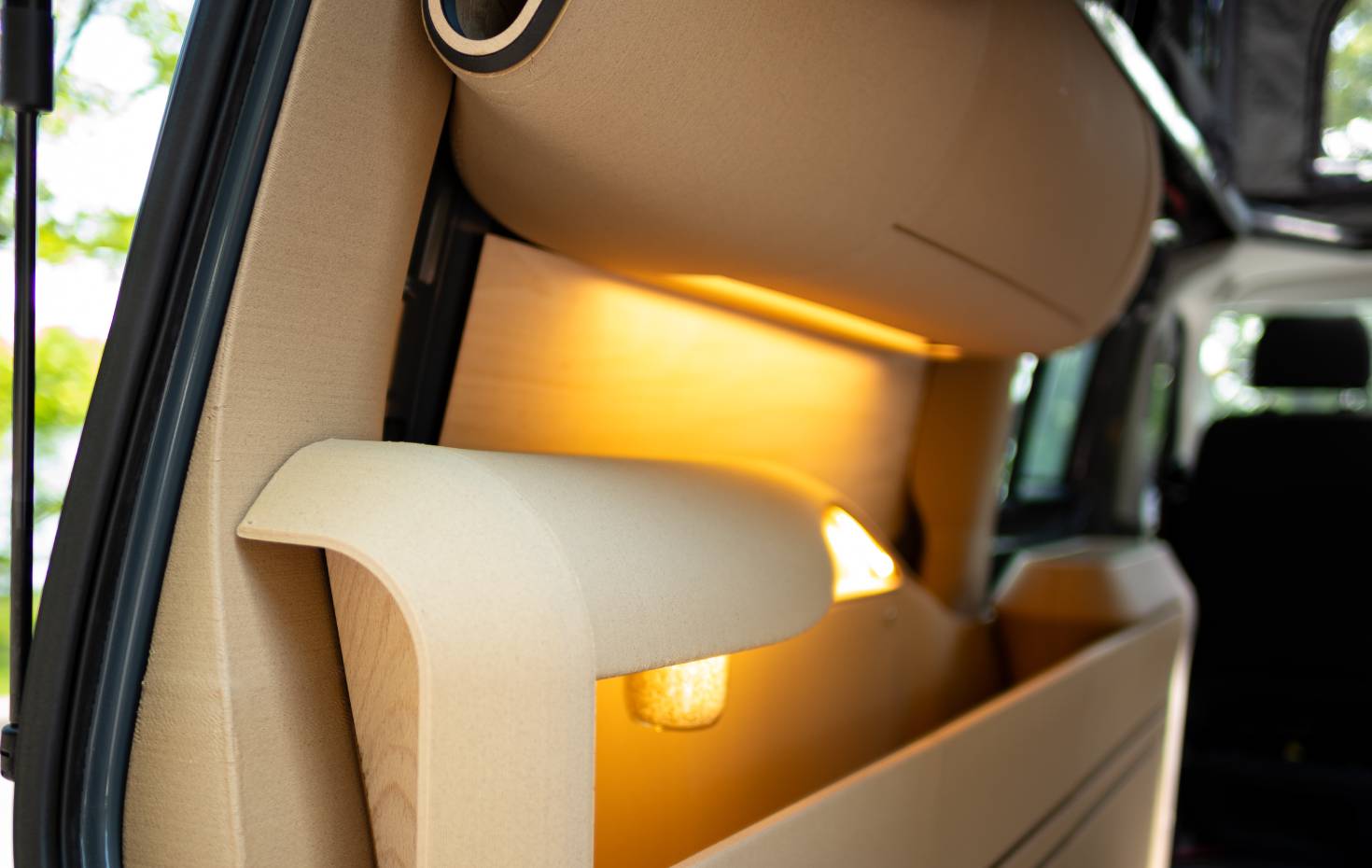
The objective is to significantly increase efficiency by reducing the need for manual measuring, cutting, and rework. The components feature integrated mounting points and are designed to align precisely with the vehicle’s structure.
Materialogic estimates that the initial integration of a system into a production line requires a one-day pilot installation process. Following this, the conversion partner is provided with standardized work instructions for subsequent vehicle builds.
A particular focus is placed on electric vehicles. In electric vans, the additional weight of a conventional interior fit-out can be especially critical due to the reduced payload capacity resulting from the battery. To address this, Materialogic utilizes lightweight 3D-printed structures and aluminum honeycomb-core panels.
For manufacturing, Materialogic states that it employs materials such as a marine-grade polymer, which can be reinforced with glass or wood fibers. This material is designed to offer high impact resistance and temperature stability. The company also incorporates a bio-based polymer material. According to Materialogic, these polymers can be broken down into pellets and reused for 3D printing up to four times.
“Materialogic does not view 3D printing as a replacement for custom interior fit-outs, but rather as a new production platform,” the company explains. Conversion companies retain their own unique design language and can continue to integrate elements such as CNC-machined furniture. 3D printing is primarily applied to areas that previously posed significant challenges—specifically those involving complex geometries, bespoke customizations, or high levels of manual labor.
Consequently, the offering is aimed not only at individual van owners but, more importantly, at professional van and camper conversion companies looking to standardize and customize their production, while also making it scalable for higher volumes. According to the company, Materialogic offers its interior systems for various vehicle platforms and is able to supply the 3D-printed components both within the United States and to Europe.
image: Max Cuppens (Materialogic, USA)
BISYKA synthetic rubber
Fraunhofer researchers have succeeded in transferring the mechanical quality of…
Natural fiber reinforced car seat
The focus of the project "Design for Recycling" is a seat shell that is made…
Absora micro-perforation material
Absora has developed a micro-perforated sheet-metal metamaterial that absorbs…
Rusted Leather
Munich based high end footwear brand nat-2 and designer Talia Luvaton present a…
IGNIS – Light from waste heat energy
The availability of affordable, independent and, above all, clean electrical…
Brake disc with reduced fine dust
Fine dust endangers our health. One of the main sources is traffic, especially…
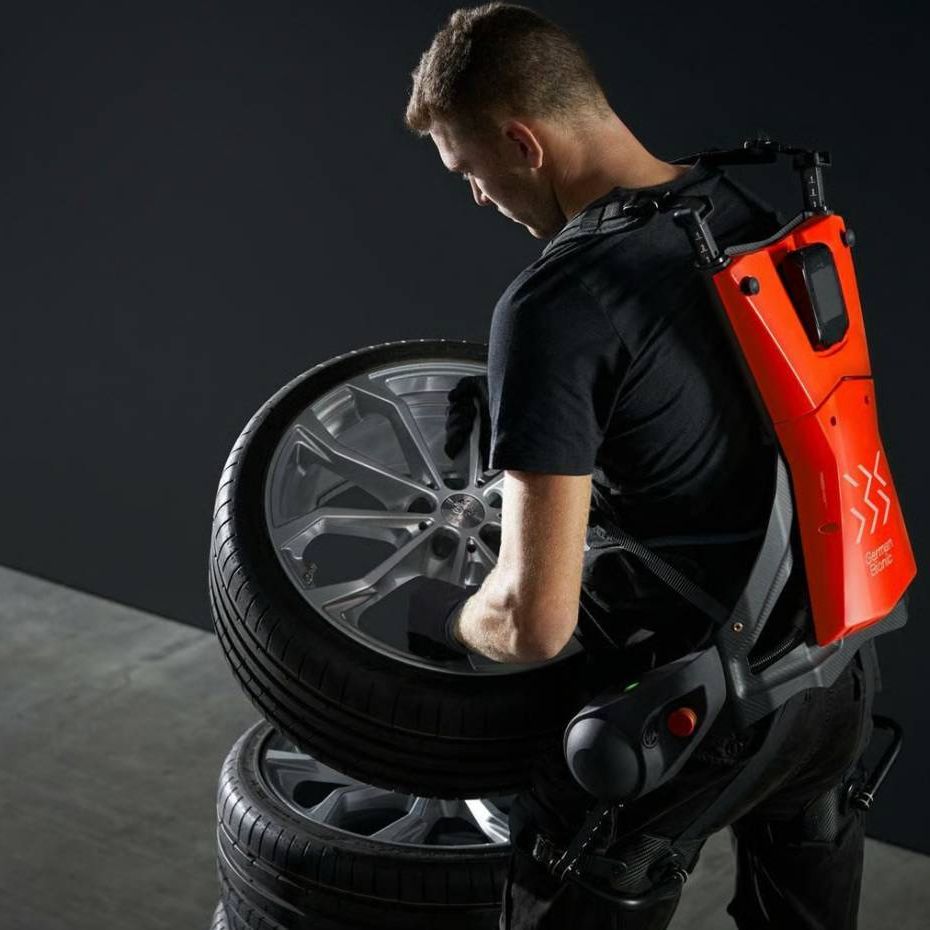
Exoskeleton assists tire changes
German Bionic has developed an AI-powered exoskeleton called EXIA for…

Bolometer chips for precise power measurement in fusion reactors
At Fraunhofer IMM, a so-called bolometer chip was developed for precise power…

Xarvio – Digital Farming
BASF Digital Farming GmbH has received the renowned Crop Science Award for the…